
500 Gross Tons – What’s the big deal?
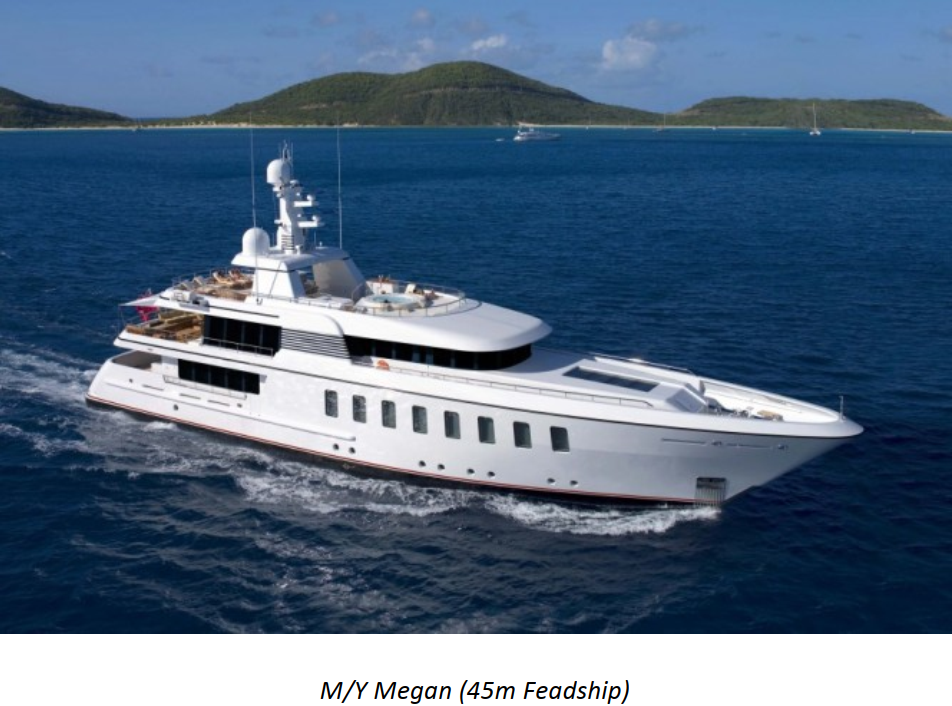
In recent years, the industry’s top yacht builders and naval architects have taken to pushing the boundaries in terms of maximising the length and width of their latest luxury vessels whilst still being able to sneak in below the “magical” 500 GT marker. Two of the biggest successes can be bestowed to Feadship, for their F45 custom 45m (147ft) series and Alloy Yacht’s 39m (128ft) M/Y CaryAli. There are currently in the region of 3000 superyachts which fit in under 500GT and this article seeks to investigate why 500GT is such a big landmark and what the consequences of limiting your internal space to 500GT. To help with the understanding of this article, below is a brief description of some of the terms which will be used in this article:
| Legislation/Code | Description |
|---|---|
| ISM | The ISM Code provides an International standard for the safe management and operation of ships and for pollution prevention. All commercial vessels (chartering) 500 tons and over have been required to comply with the code since July, 2002. |
| ISPS | The International Ship and Port Facility Security (ISPS) Code looks at the minimum security arrangements for ships, ports and government agencies. It prescribes responsibilities to governments, shipping companies, shipboard personnel, and port/facility personnel to "detect security threats and take preventative measures against security incidents affecting ships or port facilities used in international trade. All commercially registered vessels in excess of 500 gross tons are required to comply. |
| Large Yacht Code | Applicable to yachts which are 24 metres and over in load line length, are in commercial use for sport or pleasure, do not carry cargo and do not carry more than 12 passengers. The code sets out standards for safety and pollution prevention |
| MLC 2006 | The Maritime Labour Convention (MLC) is an International Labour Organization convention established in 2006. Two of the main points are that it seeks to make sure yachtsmen are correctly accommodated and have fair working hours. |
| SOLAS | The International Convention for the Safety of Life at Sea (SOLAS) is an international maritime safety treaty. It ensures that ships flagged by signatory States comply with minimum safety standards in construction, equipment and operation |
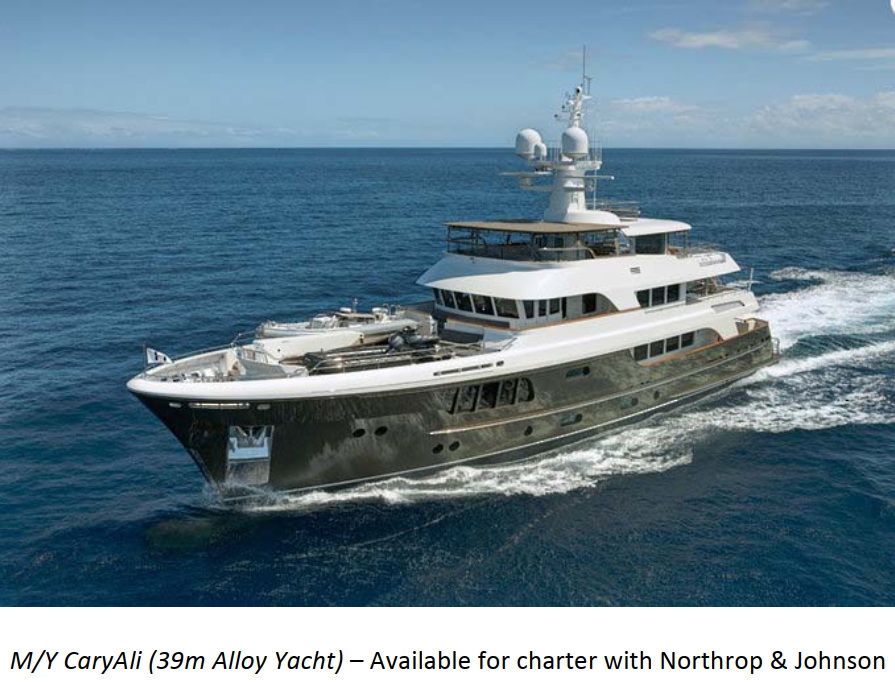
It is important to understand what is meant by the term “gross tonnage”; simply put it is the measurement of a vessel’s overall internal volume. Many people now argue that gross tonnage is the most precise way of measuring the size of a yacht, rather than traditional methods such as comparing yacht’s lengths, as it more accurately defines how much living accommodation guests can actually utilise. The significance of knowing a vessel’s gross tonnage is also a factor in not only determining internal space, however it also has a baring upon the build specification, the on board safety levels and operational running requirements of a yacht. In particular, whether the yacht has been built to the required standards set out by SOLAS and the LY3 (Large Yacht Code 2013), and if the yacht will be run as full ISM and ISPS compliant.
Since the Maritime Labour Convention 2006 was introduced, there has been significant strain put upon interior space due to set allowances which must be put aside for crew accommodation. In an interview with Boat International, Joe Foggia, previously CEO and president of US composite yacht builder Christensen was quoted saying ‘Under 500GT it’s challenging because of the space requirements for crew. It gets to the stage where anything around 40 or 50 metres the lower deck ends up having to be devoted to crew.” On a vessel which has been built and designed to the parameters of 500GT, once the crew living and accommodation space has been accounted for, the remaining area which will have to include (and not be limited to) the service areas, engineering spaces and tender garages, which can leave clients with less guest accommodation than they may have originally expected. With stricter surveying methods and clients basing expectations on yachts they owned before the introduction of MLC 2006, often the final yacht can turn out to have a much smaller interior than originally anticipated.
As mentioned above, the LY3 (Large Yacht Code) can also have a large impact on the build specification of a yacht, especially if the vessel is built with the intention to be run as a commercial yacht. Building a commercially registered yacht of under 500 GT will not have to meet the same strict building parameters of yachts over 500 GT which can save both time and costs. There is however issues that a yacht registered below 500 GT can face if it decides to take advantage of not fully conforming to LY3. If the yacht wishes to run as a charter vessel, flag states can make the commercial registration process extremely hard if there is not full compliance with the Code. Similarly, if a commercially registered yacht of 500 GT or less decides to only meet with the reduced requirements and guidelines, they will be classed as a “Short Range Yacht” which restricts the yacht as to the weather conditions it may sail under and to a maximum of 60 miles from a safe haven at any point in time without prior consent from their flag state. Yachts built for private use only have no obligation to conform to any aspect of the LY3 Code. It is not unusual though for many new build yards deciding that they will build in line with the full Code despite the status or size of their yacht, as it provides the reassurance that the vessel will meet internationally recognised safety standards and can also act as a large positive resale factor on smaller yachts.
A yacht over 500 GT must also be presented with a higher level of certification to be in acitve service. For example, vessels over 500 GT require a Maritime Labour Certificate, International Ship Security Certificate, Safety Management Certificate and a Minimum Safe Manning Document (MSMD). The MSMD could be argued to have the greatest impact, as full compliance requires a yacht to be run by crew with a much higher level of qualifications, which in turn leads to higher expected levels of crew remuneration. Yachts under 500 GT conversely only have to employ crew which satisfies the work load that the yacht presents them with. Following the same lead, it is compulsory for commercially registered yachts over 500 GT to be compliant with the International Safety Management Code or ISM. Despite ISM aiming to “provide an international standard for the safe management and operation of ships and for pollution prevention”, obligatory compliance for vessels over the 500 GT mark comes at huge annual operation costs, which is money saved by yachts under 500 GT who only carry out a “mini” or voluntary ISM.
The International Ship and Port Facility Security Code (ISPS) is also mandatory legislation for yachts above 500 GT. ISPS looks to improve security on board vessels and in port facilities, in the wake of threats made to the maritime industry following the 9/11 attacks. Yet again legislation which aims to improve safety on yachts comes at a cost in the required manning levels and time required for correct implementation. There is the argument however that despite the financial and time savings that can be made for a yacht under 500GT, is safety and manning where you want to cut costs?
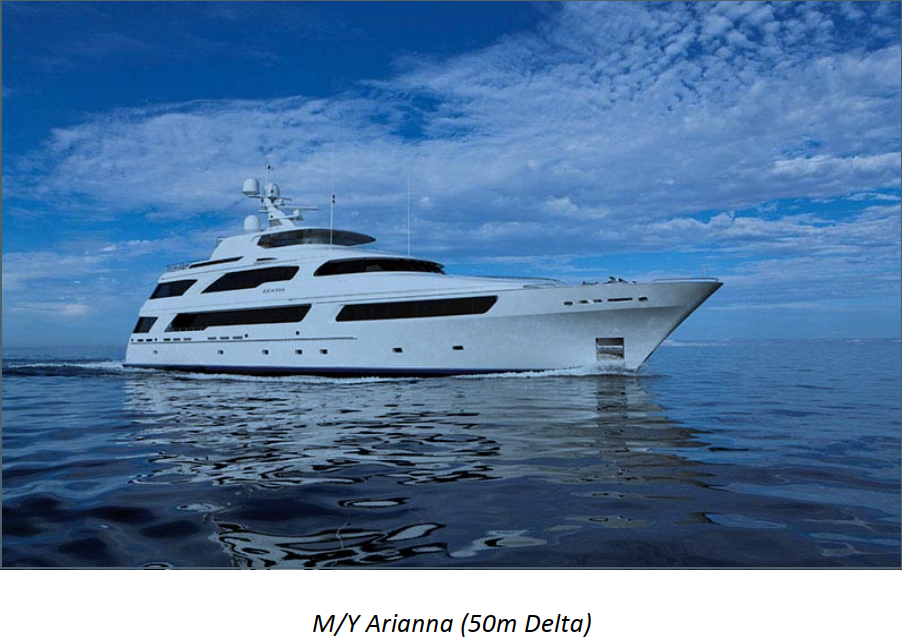
There are many naval architects now who believe that due to yachts choosing to be full ISM and MCA compliant voluntarily; constraining the internal space to 500GT is no longer a top priority of yachts larger than 40m. Delta have agreed with this philosophy and since the proud release of M/Y Arianna, having paraded her as the largest 50m (167ft) in the world, with an impressive 822 GT of internal space.
Closing the original question of “500 GT – what’s the big deal?” one can draw the conclusion that the potential for saving time and administration costs in the everyday operation of a yacht, coupled together with the allowances and less demanding building requirements, there is reason to see why many owners, yards, and naval architects strive to bring yachts into the market under 500 GT. Having said this, with the increasing numbers of yachts registering as commercial vessels, the constraints that MLC 2006 are having on interior space and with safety becoming a greater concern throughout the industry; how long will the benefits of being under 500 GT continue to exist?
A colleague once remarked that “having a mini ISM’ is akin to walking around with a French dictionary and declaring that you can speak French”. ISM involves the crew in an enhanced level of training, a goodly amount of administration, rigorous safety checks, increased manning levels, drills, keeping logs of safety checks and maintenance procedures to name but a few. A vessel which is not subject to these checks can suffer in terms of maintenance, safe running and of course value. Some owners of privately owned and privately operated vessels which have no obligation to adhere to ISM run it voluntarily in order to benefit from the increase in security.
Leave a Comment