
What happens before the champagne bottle is smashed
A brief insight into the New Build market.
It was a hot September day at the Monaco Yacht Show in 2008 when he got the call; “Jonathan, I want to back out of the deal; I do not want to buy a yacht which will be worth 30% less a month down the line, potentially I could be down as much as 50%, who knows. I can either back out of the deal without penalty after a 4 hour sea trial which would come at the expense of the current owner, or we can do it now; I suggest you need to speak to the seller.” That call set the tone for many of the world’s yacht brokers and dealers for following pain filled years to come. The FTSE would plummet 31% by the end of 2008 and the global liquidity of wealth would freeze. Brokers were no longer riding high, many were sitting on half built yacht orders and the value of many vessels were falling through the floor. The yachting industry had been stunned into submission, it was Armageddon.
What is really astonishing is that pre 2007 whilst the world was still booming and wealth was being circulated with great ease, there were globally around 250 shipyards building yachts of 30m plus and there were an estimated 777 yachts either under construction or ready for delivery.
During the turbulent years of the credit crunch, many of the remaining yards, were forced to close their doors, and others obliged to diversify into refits or other activities just to keep going. Today, thanks to a series of adventurous entrepreneurs and management buyouts, of the original 250 builders, nearly 200 have survived and are ready to meet the orders of a recovering economy.
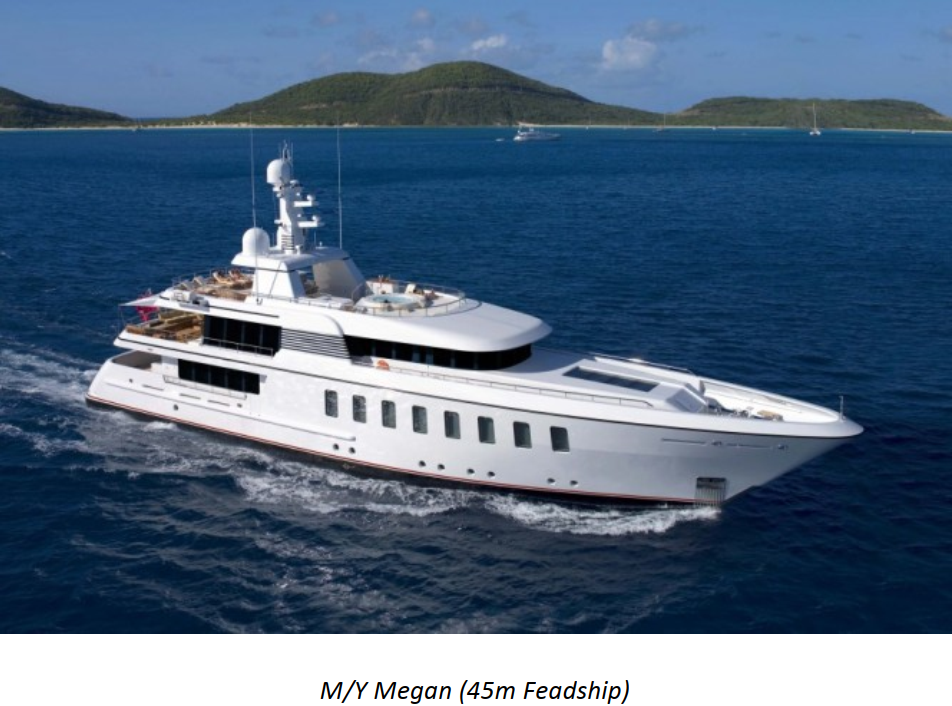
It is estimated that in 2015, 734 (39 m average) yachts will be at some stage of their construction process, of which 269 (38.9 meters average) of these yachts alone are being built in Italy. The Dutch have the second highest level of orders with 76 yachts (56.1m). Feadship and Amels are both scheduled to deliver 12 new yachts each this year, whereas Azimut-Benetti plans to deliver a staggering 66. The diversity in build quality, pricing level and design is as diverse as the brands themselves – one is good, the other is exceptional.
So from a buyer’s point of view, if you are considering a new build; where should you go and how should you go about it? Should your loyal Captain oversee the build or should you appoint a Surveyor, a firm of Surveyors or look at the services of a Management company. Then what about your broker, who may well have helped you get to this stage in the first place, what will his role be in the new build? There are a few fundamental decisions which ought to be addressed before approaching the idea of building a new yacht, with some professionals offering differing views as to the best solution for what should be a hugely enjoyable process.
Let us assume that we have a client who is hypothetically looking at a 60 meter new build motor yacht, and for simplicity’s sakes we will set a budget of € 80,000,000. We have been informed that the yacht needs to be delivered within 48 months in time for the grand celebration of the client’s 20th wedding anniversary. A fact worth noting is that around 88% of new builds are sold experienced owners. For the sake of illustration, let us look at a fairly diverse range of yacht builders: Feadship, Benetti, Mondo Marine, Sunseeker and Icon.
Taking each in turn, an enquiry to Feadship, tell us that it will take approximately 3 months to finalise the draft of a 100% custom design, the budget we have been set of € 80,000,000 is achievable, on the provision we stay away from Hydrogen powered generators, too much glass in the hull and do not have a metal flake finish.
Benetti, have stated that despite their mammoth order book they can schedule a new 60 meter motor yacht, built from either GRP or steel with a start date of 2016 which will take only 24 months to build.
Mondo Marine currently has 5 yachts in build, ranging in length from 42m up to a flagship 60m. Depending upon which of these builds comes to market and upon the buyer’s final specification, Mondo Marine are putting the current ballpark cost in the region of € 60 million for a 60m and are confident that it can be delivered in the spring of 2016.
Sunseeker, formally specialising in motor cruisers up to 80ft, are now capturing a sector of the superyacht new build market, with their M/Y Blush, a 48m semi displacement yacht built from GRP, which was launched in 2014. Sunseeker currently have one of the largest order books in Europe with 10 yachts from 28m scheduled for delivery in 2015.
Icon yachts, are a fairly recent addition to the superyacht market, claim they can deliver Dutch build quality in a fraction of the time of their neighbouring yards. Their € 63 million Icon 225 has an expected delivery time of only 32 months and their current flagship Icon 300 costing € 99 million can be delivered in 36 months, all with exceptional build quality and finish due to their unique modular build process.
Let us say you have chosen a yard, your next big decision is to decide who do you want overseeing the build? With any significant purchase in life, you want to know you are dealing with the best, practitioners who are the top of their game. A traditional option for buyers has been to employ a knowledgeable Captain to oversee the build, which on the face of it may seem a logical option. Sure, the Captain may have years of maritime experience behind him and may feel they know their owner well; a more objective view might be that a Captain usually wouldn’t be the most appropriate for the job. Years of construction can prove a long time and continuity is a huge factor; spending this time constantly away from home and family coupled with living in a shipyard will take its toll on a personal level. It would be far more advantageous for the Captain to maintain his current post and ensure an owner’s present yacht is kept at the highest standards to maximise both the client’s yachting experience and the potential sale price when the time comes to sell it on. It is also debatable whether a Captain will have sufficient experience or the technical expertise in yacht construction to be left with the responsibility to oversee and run a new build.
Perhaps a better option is to find a well-established and respected Management Company: they will have their own Technical Team with a wealth of experience with new builds. There will also be a thorough audit of materials and procedures throughout the build process. The fee charged by the Management Company should be recouped through their services in efficient negotiation with 3rd party suppliers, minimising unnecessary build costs, and reducing the need for the dreaded warranty work (which often arises from poor management) after delivery. Another option could also be to employ an Independent Surveyor or firm of Surveyors. You can guarantee that the yard will have their own to revoke any disputes you may rise, it is therefore essential that each step of the build meets the Surveyors standards, and any imperfections are noted and corrected at the earliest stage possible.
The perception and lifestyle of a Yacht Broker has largely changed for the better during the last five years, in general terms if they are not good at their job, they do not survive in the industry. Many brokers nowadays are degree educated and have in-house training for a period of years before being let loose on clients on any level. The broker should be able to use their vast industry contacts to help you negotiate with the shipyard, Management Company, or the independent surveyor to ensure that you have the best skills for the best prices possible. Brokers from responsible and well respected institutions also have the collective experience from their colleagues to fall back on, where one potential broker may not be specialised in a particular field, his colleague may have the required knowledge which may prove invaluable. It is also not uncommon that due to a broker’s exposure to a vast spectrum of yachts, they are often able to point out (from a client’s user experience point of view) aspects and ideas which enhance the build. The traditional role of a broker, to join parties together to allow for a smooth and effortless transaction, becomes a paramount role when entering into a new build. Many brokers make it their business to familiarise themselves with a range of builders in order to be able to advise their client as to the most suitable solution for them.
The superyacht new build market is clearly still vibrant, and looks as if it is destined to continue growing in the coming years, opening new opportunities and ideas to yacht owners. The importance of taking the time to lay down the correct groundwork and have the appropriate team in place is a priority before embarking on a new build. Superyachts in today’s market are finished to a level which often exceeds the client’s expectations; however depending on the specification and design desired by the client, factors such as the budget, build time frame, and location of the yard can vary significantly with each individual build project.
Temporary Admission for Yachts
This applies to privately owned vessels, that is Pleasure Yachts, not commercial vessels.
A yacht owned by a non-European person or company can be brought into the EU under Temporary Admission (TA) for a maximum period of 18 months. After that period the vessel must either go outside the EU and be proven to have spent time – one night is enough in a non-European port and then it can come back under TA. Proof is by way of an invoice from the port and say a receipt for fuel. This can be doubled down by a screen shot of the GPS, just anything to substantiate the fact that the vessel was indeed out of Europe on a given date.
If a vessel is sold whilst it is in Europe under TA, then the vessel becomes liable for VAT/TVA if sold to a European national or sold at the quayside to anyone or any corporate body irrespective of their nationality. At that point, VAT/TVA is payable to the member state where the vessel is kept. There are a variety of mechanisms for determining the value on which it is paid. In France the value is determined by a Douane (Customs) affiliated Expert Maritime (Surveyor). The valuation is often at odds with the actual value of the yacht, and in my experience, has been lower than the actual commercial value.
To legitimately avoid having to pay VAT/TVA when the vessel is sold, the transaction must take place in International Waters. That is a minimum of 12 miles from the nearest European land mass. This includes islands, so for example it is not sufficient to leave the port of Antibes and simply measure 12nm as the Îles de Lérins will still put the yacht within French territorial waters.
The vessel must be sold to a non-EU domiciled person or company to qualify for TA. If sold to say a British company, then the vessel would usually be registered under a British Flag and would require a Tonnage Survey. The total cost of this registration and survey is around € 1,500, but it serves as excellent security as far as the warranty of title is concerned. A private individual can use one of the easier registry’s such as the UK Small Ships Registry (SSR) which is inexpensive, is easy to administrate and manage.
There is no obligation to declare a vessel as being under TA in France at least. Though there is a mechanism for officially declaring it has having entered European Waters, this can be done with the Douanes themselves or through one of the agencies that can take care of these formalities for you. I have used the services of Mathez Freight in Monaco and The Woy in Nice.
500 Gross Tons – What’s the big deal?
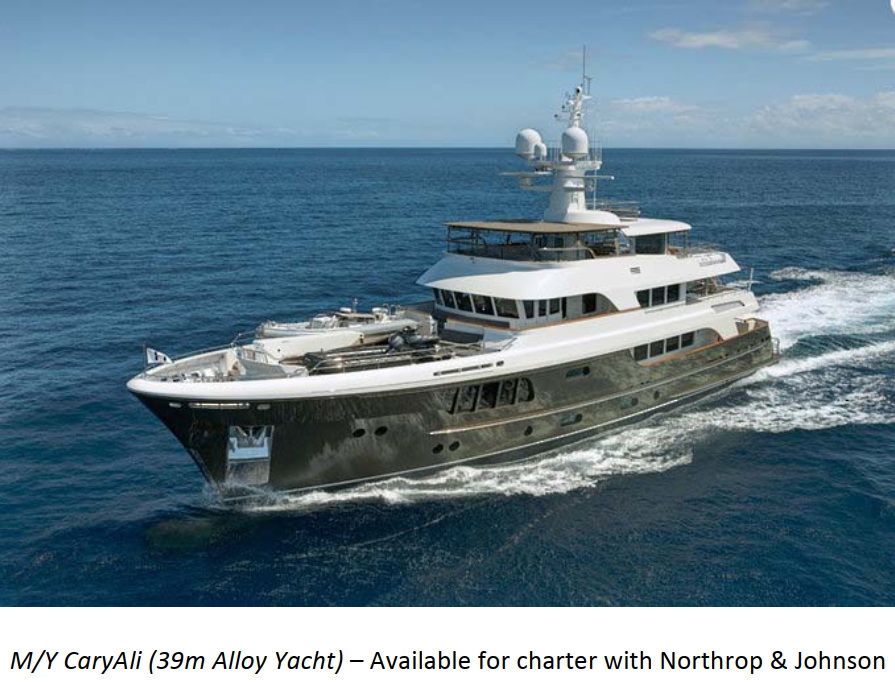
In recent years, the industry’s top yacht builders and naval architects have taken to pushing the boundaries in terms of maximising the length and width of their latest luxury vessels whilst still being able to sneak in below the “magical” 500 GT marker. Two of the biggest successes can be bestowed to Feadship, for their F45 custom 45m (147ft) series and Alloy Yacht’s 39m (128ft) M/Y CaryAli. There are currently in the region of 3000 superyachts which fit in under 500GT and this article seeks to investigate why 500GT is such a big landmark and what the consequences of limiting your internal space to 500GT. To help with the understanding of this article, below is a brief description of some of the terms which will be used in this article:
| Legislation/Code | Description |
|---|---|
| ISM | The ISM Code provides an International standard for the safe management and operation of ships and for pollution prevention. All commercial vessels (chartering) 500 tons and over have been required to comply with the code since July, 2002. |
| ISPS | The International Ship and Port Facility Security (ISPS) Code looks at the minimum security arrangements for ships, ports and government agencies. It prescribes responsibilities to governments, shipping companies, shipboard personnel, and port/facility personnel to "detect security threats and take preventative measures against security incidents affecting ships or port facilities used in international trade. All commercially registered vessels in excess of 500 gross tons are required to comply. |
| Large Yacht Code | Applicable to yachts which are 24 metres and over in load line length, are in commercial use for sport or pleasure, do not carry cargo and do not carry more than 12 passengers. The code sets out standards for safety and pollution prevention |
| MLC 2006 | The Maritime Labour Convention (MLC) is an International Labour Organization convention established in 2006. Two of the main points are that it seeks to make sure yachtsmen are correctly accommodated and have fair working hours. |
| SOLAS | The International Convention for the Safety of Life at Sea (SOLAS) is an international maritime safety treaty. It ensures that ships flagged by signatory States comply with minimum safety standards in construction, equipment and operation |
It is important to understand what is meant by the term “gross tonnage”; simply put it is the measurement of a vessel’s overall internal volume. Many people now argue that gross tonnage is the most precise way of measuring the size of a yacht, rather than traditional methods such as comparing yacht’s lengths, as it more accurately defines how much living accommodation guests can actually utilise. The significance of knowing a vessel’s gross tonnage is also a factor in not only determining internal space, however it also has a baring upon the build specification, the on board safety levels and operational running requirements of a yacht. In particular, whether the yacht has been built to the required standards set out by SOLAS and the LY3 (Large Yacht Code 2013), and if the yacht will be run as full ISM and ISPS compliant.
Since the Maritime Labour Convention 2006 was introduced, there has been significant strain put upon interior space due to set allowances which must be put aside for crew accommodation. In an interview with Boat International, Joe Foggia, previously CEO and president of US composite yacht builder Christensen was quoted saying ‘Under 500GT it’s challenging because of the space requirements for crew. It gets to the stage where anything around 40 or 50 metres the lower deck ends up having to be devoted to crew.” On a vessel which has been built and designed to the parameters of 500GT, once the crew living and accommodation space has been accounted for, the remaining area which will have to include (and not be limited to) the service areas, engineering spaces and tender garages, which can leave clients with less guest accommodation than they may have originally expected. With stricter surveying methods and clients basing expectations on yachts they owned before the introduction of MLC 2006, often the final yacht can turn out to have a much smaller interior than originally anticipated.
As mentioned above, the LY3 (Large Yacht Code) can also have a large impact on the build specification of a yacht, especially if the vessel is built with the intention to be run as a commercial yacht. Building a commercially registered yacht of under 500 GT will not have to meet the same strict building parameters of yachts over 500 GT which can save both time and costs. There is however issues that a yacht registered below 500 GT can face if it decides to take advantage of not fully conforming to LY3. If the yacht wishes to run as a charter vessel, flag states can make the commercial registration process extremely hard if there is not full compliance with the Code. Similarly, if a commercially registered yacht of 500 GT or less decides to only meet with the reduced requirements and guidelines, they will be classed as a “Short Range Yacht” which restricts the yacht as to the weather conditions it may sail under and to a maximum of 60 miles from a safe haven at any point in time without prior consent from their flag state. Yachts built for private use only have no obligation to conform to any aspect of the LY3 Code. It is not unusual though for many new build yards deciding that they will build in line with the full Code despite the status or size of their yacht, as it provides the reassurance that the vessel will meet internationally recognised safety standards and can also act as a large positive resale factor on smaller yachts.
A yacht over 500 GT must also be presented with a higher level of certification to be in acitve service. For example, vessels over 500 GT require a Maritime Labour Certificate, International Ship Security Certificate, Safety Management Certificate and a Minimum Safe Manning Document (MSMD). The MSMD could be argued to have the greatest impact, as full compliance requires a yacht to be run by crew with a much higher level of qualifications, which in turn leads to higher expected levels of crew remuneration. Yachts under 500 GT conversely only have to employ crew which satisfies the work load that the yacht presents them with. Following the same lead, it is compulsory for commercially registered yachts over 500 GT to be compliant with the International Safety Management Code or ISM. Despite ISM aiming to “provide an international standard for the safe management and operation of ships and for pollution prevention”, obligatory compliance for vessels over the 500 GT mark comes at huge annual operation costs, which is money saved by yachts under 500 GT who only carry out a “mini” or voluntary ISM.
The International Ship and Port Facility Security Code (ISPS) is also mandatory legislation for yachts above 500 GT. ISPS looks to improve security on board vessels and in port facilities, in the wake of threats made to the maritime industry following the 9/11 attacks. Yet again legislation which aims to improve safety on yachts comes at a cost in the required manning levels and time required for correct implementation. There is the argument however that despite the financial and time savings that can be made for a yacht under 500GT, is safety and manning where you want to cut costs?
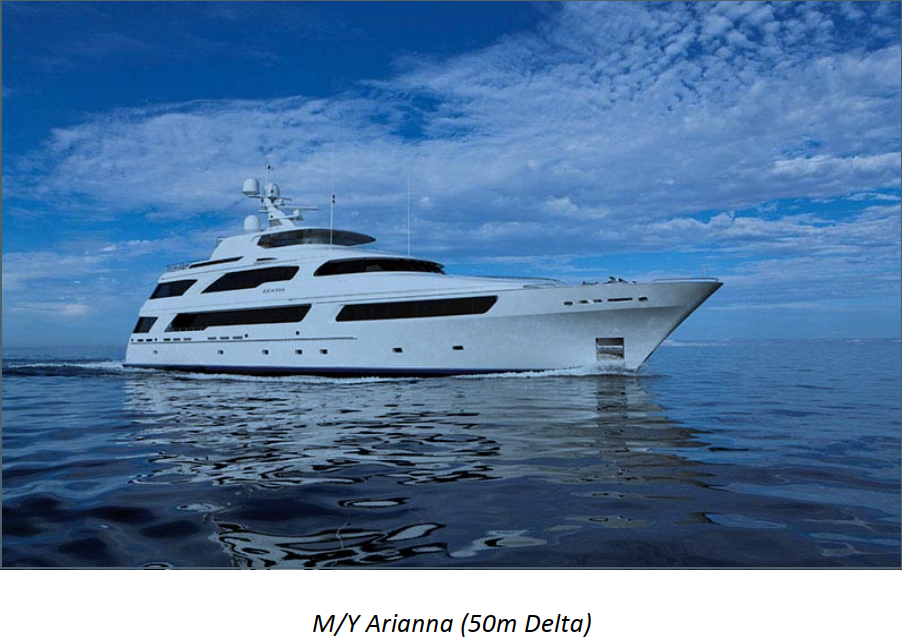
There are many naval architects now who believe that due to yachts choosing to be full ISM and MCA compliant voluntarily; constraining the internal space to 500GT is no longer a top priority of yachts larger than 40m. Delta have agreed with this philosophy and since the proud release of M/Y Arianna, having paraded her as the largest 50m (167ft) in the world, with an impressive 822 GT of internal space.
Closing the original question of “500 GT – what’s the big deal?” one can draw the conclusion that the potential for saving time and administration costs in the everyday operation of a yacht, coupled together with the allowances and less demanding building requirements, there is reason to see why many owners, yards, and naval architects strive to bring yachts into the market under 500 GT. Having said this, with the increasing numbers of yachts registering as commercial vessels, the constraints that MLC 2006 are having on interior space and with safety becoming a greater concern throughout the industry; how long will the benefits of being under 500 GT continue to exist?
A colleague once remarked that “having a mini ISM’ is akin to walking around with a French dictionary and declaring that you can speak French”. ISM involves the crew in an enhanced level of training, a goodly amount of administration, rigorous safety checks, increased manning levels, drills, keeping logs of safety checks and maintenance procedures to name but a few. A vessel which is not subject to these checks can suffer in terms of maintenance, safe running and of course value. Some owners of privately owned and privately operated vessels which have no obligation to adhere to ISM run it voluntarily in order to benefit from the increase in security.
BUYING A MOTORBOAT OR SAILING BOAT IN EUROPE USING THE MYBA CONTRACT
INTRODUCTION
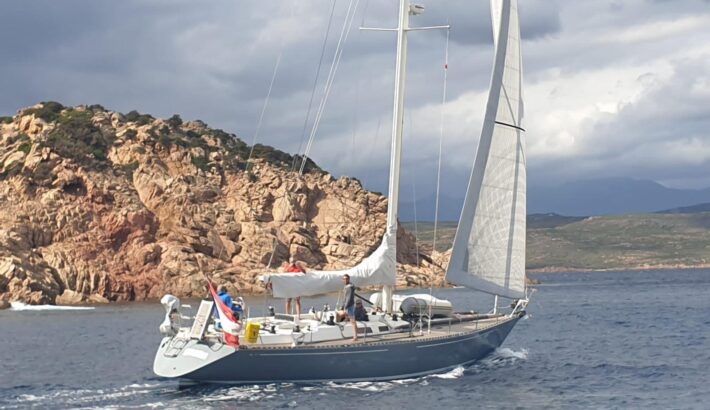
Purchasing a yacht in Europe, whether a motorboat or a sailing boat, is a significant investment. To ensure a smooth, transparent, and professionally managed transaction, many buyers and sellers use the internationally recognised MYBA Sale & Purchase Agreement (SPA).
WHAT IS THE MYBA CONTRACT?
The MYBA SPA is a legal framework created by the Mediterranean Yacht Brokers Association. It is widely used in professional yacht sales across Europe and offers:
- Clear legal protection for both buyer and seller
- Standardised procedures for inspection, trial, and closing
- Defined responsibilities and timelines
- Use of an independent escrow agent for deposit and funds
It is suitable for: – Large or small yachts – Leisure or professionally managed vessels – Cross-border European transactions
STEP-BY-STEP GUIDE TO BUYING A YACHT
1. Negotiation & Contract Signature
- Price and main terms agreed
- MYBA SPA signed by both parties
- 10% deposit paid into escrow
2. Inspection
- Buyer views the yacht in person
- Visual check of general condition and inventory
3. Sea Trial
- Conducted at seller’s expense unless agreed otherwise
- Buyer observes engine performance and handling
- Lasts 1–4 hours
4. Survey
- Buyer appoints a qualified marine surveyor
- Full check of hull, systems, rigging, engines
- May include haul-out and diagnostics
- Used to confirm technical condition
5. Acceptance or Rejection
- Buyer decides to accept or reject the yacht based on findings
- If accepted, the sale proceeds
- If rejected, deposit is returned per contract terms
6. Closing
- Final payment is made
- Ownership transferred via Bill of Sale
- All documents handed over (registration, VAT, class, etc.)
- Yacht delivered to the buyer
BENEFITS OF USING THE MYBA CONTRACT
- Legal protection for both sides
- Transparent process from start to finish
- Minimised risk with defined exit clauses
- Used by professionals across the European yacht market
CONCLUSION
Whether buying a sailing boat or a motor yacht, using the MYBA Sale & Purchase Agreement ensures a secure and clearly defined process. From negotiation through to delivery, each step is managed with professionalism, legal clarity, and peace of mind.
Work with an experienced yacht broker who understands the MYBA framework and can support you every step of the way.
For more information or to begin your yacht purchase journey, contact your trusted yacht advisor today